
High-Precision Time Synchronization at EANTC Multi-Vendor Interoperability Testing
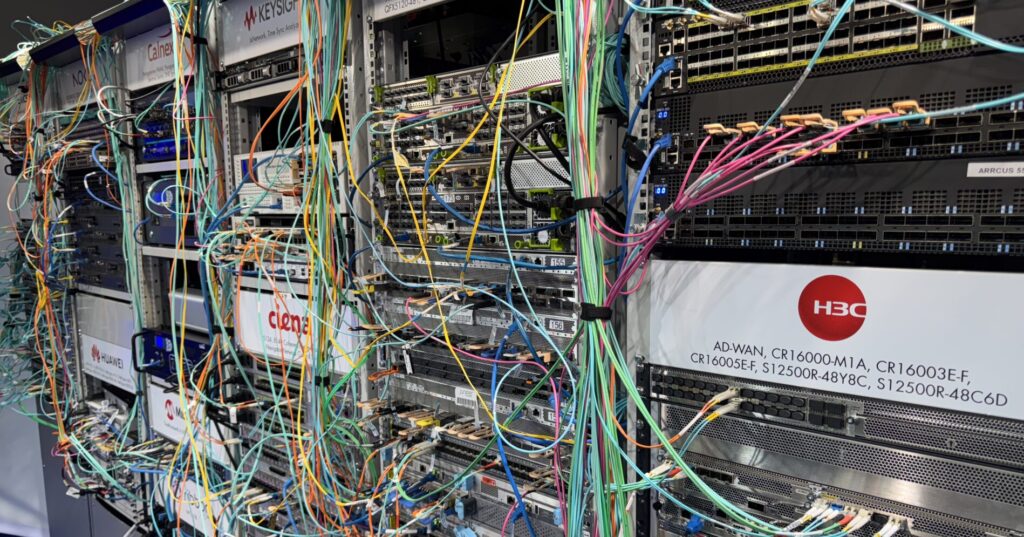
Precision time synchronization is critical for advanced telecom networks, especially with the rise of 6G. In these videos, we show a successful demonstration at EANTC that highlighted the capabilities of “Class D” clocks, achieving network-wide synchronization with sub-50 ns error across multiple boundary clocks. Additionally, eight major vendors showcased interoperability between time synchronization gateways supporting different ITU profiles, bridging the gap between legacy and modern network partitions.
Time Synchronization Class D Clock Chaining
Time synchronization of telecom networks needs to be extremely precise for some use case scenarios. Today, so-called “Class C” clocks in routers are sufficient for common 5G scenarios, but in the future, “Class D” clocks will be required for 6G and more advanced mobile and other use cases. Network-wide precision of less than 50 ns time interval error must be reached. Clock precision must be maintained even if multiple boundary clocks (regenerating the signal from a grandmaster clock) are sequentially chained. Such a scenario is common in large networks. As a technology viability demonstration, EANTC and ten vendors (Arista, Calnex, Ciena, Cisco, Ericsson, H3C, Huawei, Juniper, Keysight, and ZTE) successfully validated a chain of nine Class C and Class D boundary clocks to provide synchronization within the standards-required precision. The G.8275.1 telecom profile with enhanced SyncE was used.
Time Synchronization Profile Gateways
Eight leading vendors participated in the interoperability demonstration of time synchronization gateways: Arista, Calnex, Ciena, Cisco, Ericsson, Huawei, Keysight, and Microchip. Steven Koutstaal (Ericsson), Sayantan Pramanick (Keysight), and Dennis Hagarty (Cisco) show a demonstration of interworking gateways between ITU G.8275.1 (Precision time protocol telecom profile for phase/time synchronization with full timing support from the network) and G.8275.2 (partial timing support). As time sync infrastructures are growing, bridging these profile domains to integrate legacy network partitions is often necessary.